

Dialogues of the Buddha : ค้นหาหนังสือธรรมะ หน้า 24 / 96
หน้าหนังสือทั้งหมด
57
The Noble Truth of the Eightfold Path
4.1 The Path as the Escape from the Cycle of Existence
This is the direct definition of the Noble Truth of the Path to the End of Suffering. Whosoever wishes to traverse the ocean of the Cycle of Exis
This text discusses the Noble Eightfold Path as the essential means to traverse the Cycle of Existence and end suffering. It illustrates the overwhelming nature of this cycle, marked by the suffering
58
Understanding the Noble Eightfold Path
Those who are wise and endowed with Right View will see the dangerous reality of craving, and not delay in practising the Noble Eightfold Path as a vessel to take them beyond the Sea of Worldliness.
4
This text discusses the importance of the Noble Eightfold Path as a means to transcend worldly cravings and achieve Nirvana. It elaborates on how it is the strongest method for ending suffering, highl
74
Understanding Resentment and Suffering in Buddhism
about a certain thing. These are all the characteristics of resentment which will bring us misery for as long as we still harbour it in our hearts.
9. Bemoaning [upāyassa sukkha]
The Buddha characteri
This text delves into the characteristics of resentment as a source of misery and describes the Buddha's teachings on different forms of suffering. It explains how sorrow is a mental state, lamentatio
78
Understanding the Noble Truth of Suffering
tial a person might be, it doesn't merit any special consideration on suffering's part — all are equal in the face of suffering. Thus, realization of the reality of suffering for what it really is, to
This section discusses the Buddhist understanding of suffering, emphasizing that all beings are equal in their experience of suffering. It highlights the significance of realizing the Noble Truth of S
80
The Three Forms of Craving in Buddhism
The Three forms of Craving
The Lord Buddha taught that there are three sorts of craving: craving for sense-pleasure [kāmaṭhaṇa], craving for the form realms [bhavatānha] and craving for the formless r
The Lord Buddha identified three types of craving: 1) Craving for Sense-Pleasure (kāmaṭhaṇa) signifies a longing for sensory experiences which misleads individuals into thinking happiness comes from e
84
The Dangers of Craving in Buddhism
four unfortunate realms [abhāyabhūmi]. Just as the swift currents of a river tend to sweep away all things to the ocean that fall within its reach, desire will tend to pull all beings who entertain it
This text discusses the profound impact of craving on beings, illustrating how it drives them towards hell realms and unwholesome actions. The Buddha's teachings emphasize that craving can lead to sin
119
The Noble Truth of the Path to the Cessation of Suffering
The Noble Truth of the Path to the Cessation of Suffering
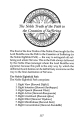
The final of the four Truths of the Noble Ones taught by the Lord Buddha was the Path to the Cessation of Suffering (or the Noble Eightfold P
The Noble Eightfold Path, the final of the Four Noble Truths, is the way to eliminate suffering and attain Nirvana. It consists of eight components: Right View, Right Intention, Right Speech, Right Ac
123
Understanding Suffering and the Subtle Human Body
wealth. As the majority of sorts of suffering concerns material things, having attained the subtle human body, the mind, being unified with the subtle human body, is safely withdrawn beyond the reach
This text discusses why most people suffer due to attachment to their physical bodies and possessions, despite intellectually understanding Buddha's teachings on impermanence. The author emphasizes th
143
Understanding the Dhamma Body and the Noble Path
Dhamma Body — not with the human eye or the naked eye.
All the knowledge that brought him to Buddhahood came
by the ‘knowing’ of the Dhamma Body, not by rationale or
reasoning with the logical (hum
The Dhamma Body can only be perceived beyond the human eye, allowing the Buddha to grasp deep truths about existence. His compassion drove him to teach the Noble Path for the liberation of others, adv
158
The Nature of Wives in Buddhist Teachings
7. A wife like an slave: A wife who allows herself to be abused, slapped or beaten by her husband without becoming angry or vengeful and without blaming her husband, who is contented to be completely
This text discusses different types of wives in Buddhist teachings, illustrating how their characteristics influence their karmic outcomes. It differentiates between negative types, like a wife who is
177
The Enlightenment of the Buddha’s First Disciple
The Enlightenment of the Buddha’s First Disciple
In preaching the Dhammackakapavattana Sutta, the Buddha revealed the Thirty-Seven Factors of Enlightenment [bodhipakkhiyadhamma], the Cycle of Depende
The Buddha, in the Dhammackakapavattana Sutta, introduced the Thirty-Seven Factors of Enlightenment, laying down the framework of the Four Noble Truths and the Cycle of Dependent Origination. Dhammaca
178
The Three Cycles of Examination in Buddhism
The Three Cycles of Examination comprise:
1. Saccānāna: Knowledge of the existence of each Noble Truth over which the Lord Buddha had unequaled personal knowledge and which he could teach to others wi
The Three Cycles of Examination define knowledge concerning the Noble Truths which the Lord Buddha taught. Saccānāna pertains to the knowledge of each truth’s existence; Kiccanānā addresses the necess
181
The Path to Liberation in Buddhism
the defilements from their minds and to attain liberation.
The conclusion we can draw from seeing Koṇḍañña at-
tain stream-entry after a relatively short teaching (and also
from seeing the rebirth of
The text discusses how Koṇḍañña attained stream-entry through accumulated wholesome deeds from past lives, emphasizing the importance of good deeds in the present. It highlights that contact with the
184
The Path to Sainthood According to Buddhism
Whenever the Buddha arises in the world and our Perfections are sufficiently developed, we too may be the first disciple to attain Sainthood in that Buddha’s dispensation, in the same way as Koṇḍañña.
The text discusses the possibility of achieving Sainthood when the Buddha arises and our Perfections are fully developed, exemplified by Koṇḍañña. If not, there's potential for rebirth in heavenly rea
187
Transportation of Communities in Buddhist Scriptures
to transport the community from one continent to another or even one world to another. In the time of the Buddha, the scriptures report that people and the Universal Monarch were transported from anot
This text discusses the transportation of the community during the time of Buddha, where beings from Uttarakururūpa were brought to Jambudīpa via the Jewelled Wheel of the Universal Monarch. After the
188
Understanding the Dhammacakka Pavattana Sutta
[vāddha-saṃsāra] on the levels of the Sensual Plane, the Form Plane and the Formless Plane so that we can enter upon Nirvana.
Thus in the inauguration of the Dhamma to the world, these two reasons are
The Dhammacakka pavattana Sutta marks the inaugural teaching of the Buddha, delivered at Isipatana Deer Park two months post-enlightenment. This Sutta introduces foundational concepts in Dhamma, empha
194
Choosing the Right Disciples in Buddhism
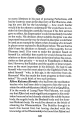
so many lifetimes in his past of pursuing Perfections, still
had to waste six years in the discovery of the Dhamma, stak-
ing his own life for the knowledge — how much harder
would it be for others to
Through his past lifetimes and pursuit of Perfection, the Buddha dedicated six years to discover the Dhamma. Acknowledging the difficulty others may have in understanding, he chose his first disciples
201
The Noble Truths of Suffering and Cessation
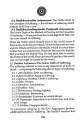
3.3 Dukkhanirodha Aryasacca: The Noble Truth of the Cessation of Suffering—the sickness of suffering which plagues us all has a cure;
3.4 Dukkanirodhagāminī Paṭipadā Aryasacca: The Noble Truth of the
The Noble Truths articulate the nature of suffering and its cessation. Dukkha encompasses various types of suffering including birth, aging, and death, as well as emotional pains like sorrow and disap
206
Knowledge of the Path to Cessation of Suffering
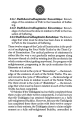
3.8.1 Dukkhanirodhagāminī Saccāṇa: Knowledge of the existence of Path to the Cessation of Suffering.
3.8.2 Dukkhanirodhagāminī Kiccaṇāṇa: Knowledge of what must be done in relation to Path to the Ces
This text discusses the twelve stages of the Cycle of Examination derived from the Four Noble Truths and their relation to enlightenment. It elaborates on the three circuits: knowledge of existence, k
208
The Proclamation of Deities in Buddhist Cosmology
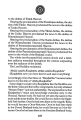
to the deities of Yāma Heaven.
Hearing the proclamation of the Tavātma deities, the deities of the Yāma Heaven proclaimed the news to the deities of Tusita Heaven.
Hearing the proclamation of the Yāma
In Buddhist cosmology, the deities of Yāma Heaven relay a proclamation to Tusita, Nimānārati, and Paranimitavasavatī Heavens, causing a cosmic event. This gains the attention of the Lord Buddha, refer